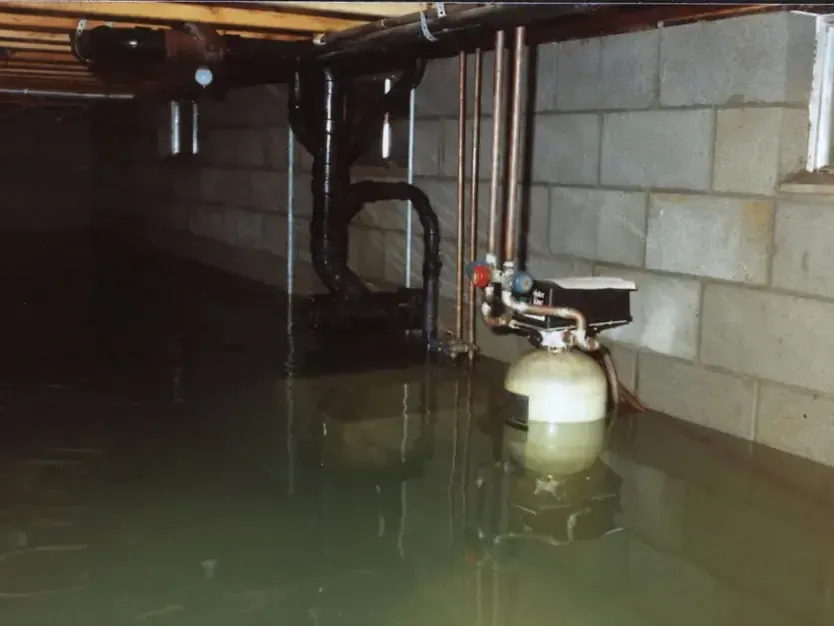
A sump pump can make noise while water continues rising around the pit. Woburn has separate sanitary sewer and stormwater systems, and the city warns that illegal sump and drain connections overtax the sewer system. Cleanup therefore needs attention to the discharge route as well as the overflow inside the building.
Key takeaways
- A running motor, a rising pit and an exterior discharge observation are different clues to record.
- Wet electrical equipment and standing water require an access assessment before pump handling.
- The discharge destination needs evaluation by the appropriate professional before any rerouting.
- Overflow cleanup follows the water across finished floors and behind storage.
- Drying can progress once continuing water entry and dependable removal are addressed together.
Describe the pit behavior without reaching into it
The owner can report whether water is rising, whether a pump sound is audible and whether the surrounding floor is already wet. Those observations should be made from a safe location, with electrical components left alone when water or damaged equipment makes access uncertain.
A pump that is silent raises different inspection questions from one that runs continuously while the pit remains full. The responding technician evaluates power, controls and the pumping arrangement as appropriate, while the property contact records when the behavior changed and whether rainfall or incoming water was also changing.
Sump failure cleanup addresses the overflow that has escaped into the building. The assessment should map that wet area while the pump problem is investigated, so soaked finishes and stored contents receive attention even when restoring operation becomes the immediate focus.
- Report audible operation separately from visible water movement.
- Identify any water around electrical connections without touching them.
- Record whether overflow is spreading beyond the utility area.
- Keep the pit approach clear for the responding professional.
Follow the discharge route with the appropriate trade
The pipe leaving a sump needs an identified destination and a working path. A qualified contractor can inspect accessible connections and explain any obstruction, damaged section or unsuitable arrangement, while the owner supplies photographs or prior maintenance records that clarify how the installation has been used.
The city states that illegal sump pumps and drain connections overtax its sewer system. A proposed reroute therefore needs the appropriate professional and municipal guidance for the actual installation, with the discharge destination settled before an improvised connection creates another drainage problem.
Stormwater pipes carry runoff toward waterways including the Aberjona River, Horn Pond, Walker Pond and Shaker Glen Brook. The city's separate drainage systems make accurate identification of the existing connection useful when a contractor discusses changes and the property contact reports the observed failure.
- Ask the contractor to identify the discharge destination in the work record.
- Provide any available notes from earlier pump or drainage work.
- Record the component found to be obstructed or damaged.
- Keep proposed connection changes distinct from immediate overflow cleanup.
Watch for water that returns to the same collection area
Restoring pump operation should be followed by observation of what happens to incoming water and the surrounding floor. The technician can evaluate whether the pit level responds appropriately and whether an accessible discharge observation shows water leaving as expected, with changes recorded during the assessment.
A discharge problem can coexist with continuing rain entry, so the room survey should keep those observations separate. Water appearing at a wall joint or doorway receives its own location on the sketch, allowing the team to assess the whole wet area without attributing every damp surface to the pit.
The local water damage overview includes recovery tasks for the adjoining building materials. When the pump arrangement is functioning again, the contractor and mitigation team can coordinate the next steps for extraction and access to finishes that were exposed during the overflow.
- Record where fresh water appears away from the pit.
- Compare the floor condition before and after pump work.
- Keep the service contractor informed about continued overflow.
- Identify whether another entry route needs assessment.
Remove overflow from the places the pump cannot reach
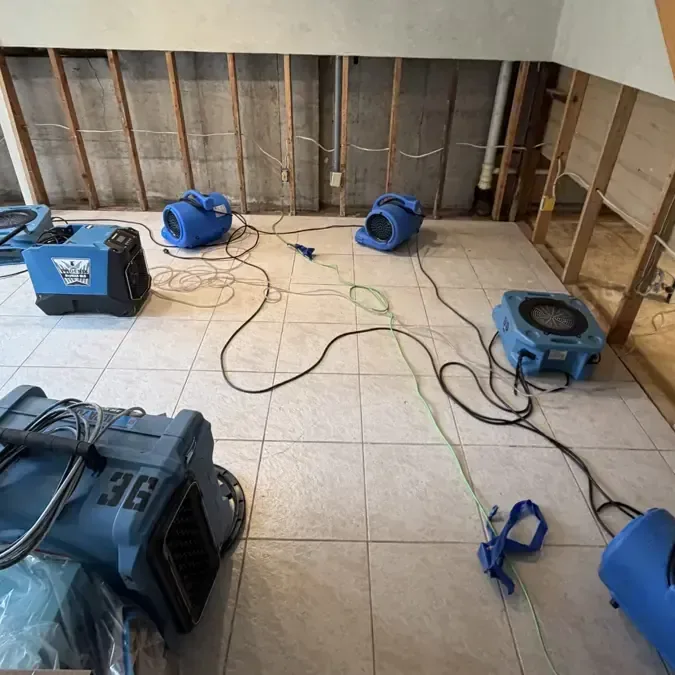
Water outside the pit can remain beneath shelving, behind stored boxes or across a finished floor even after the pump resumes operating. Extraction equipment addresses those areas directly, with the room layout and material condition determining how access is arranged around fixed fixtures and stored contents.
The crew documents the spread before moving affected belongings, then checks newly exposed wall and floor edges. A storage corner may reveal wet backing or trim that was hidden during the initial response, and that finding should be added to the scope while the area is accessible.
The city identifies flooding as a major natural hazard and reports existing flooding near Horn Pond Brook. For the current property, the cleanup record should remain specific to the observed overflow, other entry locations and the actual assemblies affected inside the basement.
Keep the drying setup independent of pump assumptions
A working sump does not remove moisture already absorbed by building materials. The drying technician identifies retained wall, floor and framing surfaces and chooses measurement points that represent their condition, keeping that record separate from the service contractor's assessment of pump operation.
The sump overflow recovery process brings extraction and material drying together after the immediate equipment problem is addressed. If the room becomes wet again, the team reevaluates incoming water and removal performance before treating the change as an ordinary drying adjustment.
Stored items should remain clear of monitored wall edges until the assessment is complete. The property contact can discuss a temporary storage plan with the crew, preserving access to the slower drying areas while making the rest of the building practical to use during the recovery.
- Measure retained finishes beyond the immediate pit surround.
- Keep access to marked wall and floor positions available.
- Report renewed wetness separately from routine equipment noise.
- Record any drying change prompted by continuing water entry.
Retain a service record that explains the entire failure
The pump contractor's record should name the discovered problem, the work performed and any remaining recommendation for the installation. A description of the discharge route makes that record especially useful when another technician later services the equipment or assesses a recurring overflow concern.
The mitigation record covers the separate interior consequences: affected rooms, material removal, contents handling and drying completion. Photographs of the pit area and the outer edges of the loss help connect the equipment incident with the finished surfaces that required attention farther across the room.
The owner can keep both records with notes about the conditions when overflow began. That combination gives a later inspection a concrete sequence to consider and helps future maintenance focus on the actual equipment and drainage arrangement rather than relying on a general recollection that the basement flooded.
Questions
Does a running pump mean the discharge is working?
Audible operation is only one observation. The service assessment also evaluates water movement, the pit response and the accessible discharge arrangement to identify why the level remains high or overflow continues.
Can a sump discharge be moved into a convenient drain?
The destination needs assessment before a connection is changed. The city warns about illegal sump and drain connections overtaxing the sewer system, so the contractor should establish the appropriate arrangement for that property.
Why does cleanup continue after the pit level drops?
Escaped water can remain in room finishes and storage areas outside the pit. Those materials require their own inspection and extraction or drying decisions even when the pump has returned to operation.
What record is useful if the overflow happens again?
A component specific service note, an identified discharge route and photographs of the prior wet area provide a useful comparison. The owner should also retain the sequence of observed water changes during the earlier event.