Roof Leak Water Damage in Wakefield, MA
The roof-leak response team follows rainwater from attic materials into ceilings and walls. Source repair and interior drying work together so trapped moisture does not remain after the weather clears.
(888) 629-3140Rain through the roof? Call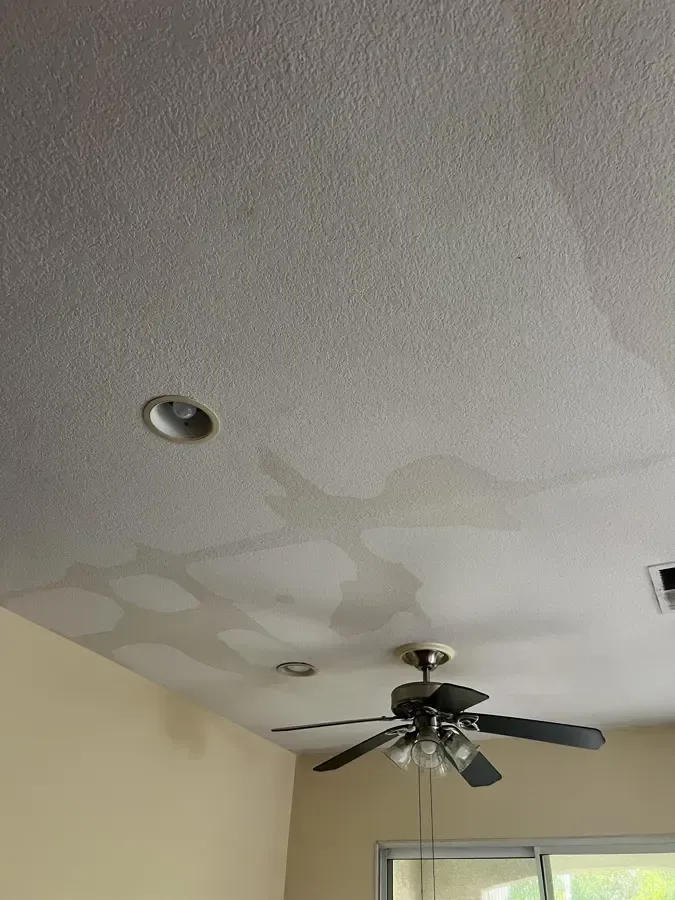
Roof leak water damage in Wakefield often becomes visible below the actual opening. Water can follow sheathing, a rafter or a penetration before staining the ceiling. The restoration crew traces the wet route inside while a roofing professional assesses the exterior source and weather protection.
The roof leak water damage process
Locate interior wetting
The technician maps stains and accessible attic moisture, identifying the assemblies between the suspected entry and the visible ceiling damage.
Coordinate roof protection
The roofing professional handles exterior repair or protection. The restoration crew confirms whether water continues to enter before relying on a drying setup.
Expose wet insulation
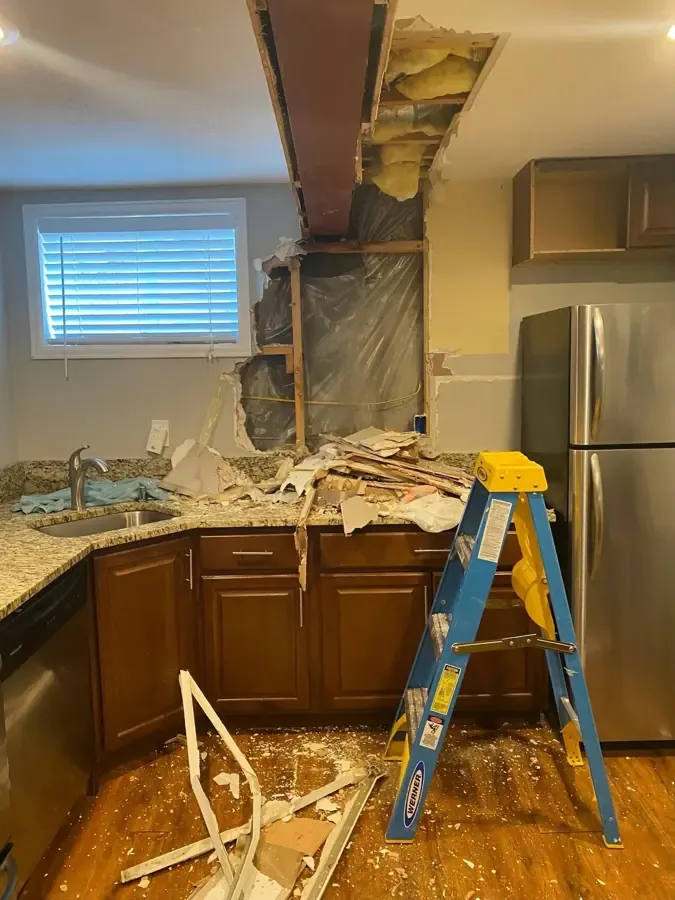
The team assesses insulation and ceiling finishes, documents removal and creates practical access to framing that can otherwise remain concealed.
Verify the attic dry-out
Material readings track accessible sheathing and framing. The crew records the final condition before insulation and interior finishes close the assembly.
Tracing rainwater through the attic
A ceiling stain is a starting point, not the repair location. The technician checks accessible sheathing, insulation and framing around the stain and farther upslope. Saturated insulation can conceal a larger wet area and restrict evaporation. Removing affected insulation may be necessary to expose the materials that require drying and to evaluate the ceiling beneath.
Cold, snowy winters and rainy springs shape the local weather pattern. Homes in Greenwood, around Crystal Lake and near Wakefield Common can need different roof access arrangements. The inspection follows the roof slope, ventilation and covering at the affected property.
- Record when the leak appears during weather and whether wind changes the drip location.
- Check attic access from a stable, dry location without climbing onto wet or unstable surfaces.
- Keep belongings away from ceiling stains before the affected finish starts to deform.
- Document wet insulation before removal so the scope preserves the original assembly condition.
A repaired roof can still leave wet insulation overhead. The mitigation crew checks the concealed path before the ceiling is refinished.
(888) 629-3140Discuss the wet atticSeparating roof repair from interior mitigation
A roofer addresses the opening and exterior drainage. The drying crew handles the water that already entered the building. Sealing the exterior does not remove moisture from rafters or ceiling cavities. The team coordinates the work so continuing entry stops before the drying environment is established, and attic access remains safe for the inspection.
Stay below a stable ceiling only
Residents avoid rooms with a sagging or actively deforming ceiling and never climb onto a wet roof to investigate. Water around ceiling lights requires electrical evaluation. The crew assesses stability and safe access before opening finishes or moving equipment into an attic, where hidden footing hazards can complicate the work.
Restoring a dry roof-side assembly
Airflow and dehumidification must reach the wet material, not simply the occupied room below. The technician records conditions in accessible attic zones and checks whether insulation or finishes prevent drying. Replacement insulation and ceiling repair follow verification. A closing record should describe remaining roof work separately from completed interior mitigation.
The National Weather Service winter safety information supports weather awareness. The Ready.gov preparedness material addresses household storm planning and utility safety.
Practical steps for roof leak water damage
Report the weather pattern
A leak during wind-driven rain can behave differently from one during melting snow. The timing helps the roofer and mitigation crew plan inspection.
Protect the occupied room
Contents move away from the drip area when safe. Residents stay outside unstable ceiling zones instead of placing buckets directly beneath a bulge.
Keep access practical
The crew plans attic entry, lighting and equipment routes. Storage and narrow openings can affect the sequence without changing the need to reach wet materials.
Preserve repair distinctions
The written record separates exterior source work from insulation removal, interior drying and finish repair. Clear descriptions support the household’s next decisions.
What does roof leak water damage cost in Wakefield, MA?
Roof leak interior mitigation often costs $1,000 to $5,500. Wet insulation, attic access and ceiling removal change the scope. Roofing repair and replacement insulation are evaluated separately from water extraction and drying.
Small ceiling area
$1,000 to $2,000
- Moisture tracing
- Limited access
- Targeted drying
Attic and ceiling
$2,000 to $3,800
- Insulation assessment
- Framing checks
- Equipment setup
Several rooms below
$3,800 to $5,500+
- Expanded openings
- More wet materials
- Repeated monitoring
Water category, affected square footage, material class and the delay before drying all change the scope. These planning ranges are not a quote. Compare the Wakefield water damage cost calculator with the written on-site scope.
Roof leak water damage coverage in Wakefield
Restoration coverage includes ZIP 01880, Greenwood, Downtown, Main Street, Water Street and homes around Lake Quannapowitt and Crystal Lake. The response team assesses the water source, affected materials and access before planning extraction and drying.
Nearby coverage reaches Reading, Melrose, Stoneham, Woburn, North Reading.
Related water damage services in Wakefield

Roof Leak Water Damage questions in Wakefield, MA
Why does the ceiling leak away from the roof opening?
Water can travel along framing and the underside of roof sheathing before dropping into insulation. The visible stain marks where it collected, not necessarily where it entered. Interior moisture tracing and exterior roof assessment work together to identify the complete route.
Can insulation stay after a roof leak?
The type of insulation, degree of saturation and contamination determine the decision. Wet insulation can hold moisture against framing and prevent useful access. The technician explains what needs removal and what may remain, then checks the exposed assembly before replacement material is installed.
Does a roof repair end the drying need?
A repaired opening stops additional entry but leaves absorbed water inside. Rafters, sheathing and ceiling materials may need active drying. The restoration crew tracks those materials separately so an apparently repaired roof does not hide an unfinished interior moisture problem.
Should an attic fan run immediately?
Equipment choices depend on safe power, moisture conditions and the affected assembly. An ordinary fan may move humid air without removing enough moisture. The drying team chooses airflow and dehumidification together and checks whether the setup reaches the wet surfaces.
How are ceiling-light leaks handled?
The household stays clear of the fixture and affected circuit until a qualified electrician evaluates it. The restoration crew coordinates safe access and does not treat the light opening as a convenient drain. Ceiling stability and hidden water receive assessment before any opening.
Can a roof leak be assessed overnight?
The response team offers 24/7 dispatch for interior water damage. Weather and safe roof access affect exterior work. The initial plan focuses on occupied-room hazards, continuing drips and wet materials while roofing professionals handle the roof-side assessment.
Trace the roof leak through the building
The restoration team coordinates interior access and measured drying after rainwater reaches the attic or ceiling.
(888) 629-3140Arrange roof-leak drying