Commercial Water Damage in Wakefield, MA
The commercial restoration team plans water removal around occupied areas, inventory and building systems. A documented drying scope helps property managers understand access restrictions, material decisions and the sequence toward repair.
(888) 629-3140Business flooded? Discuss access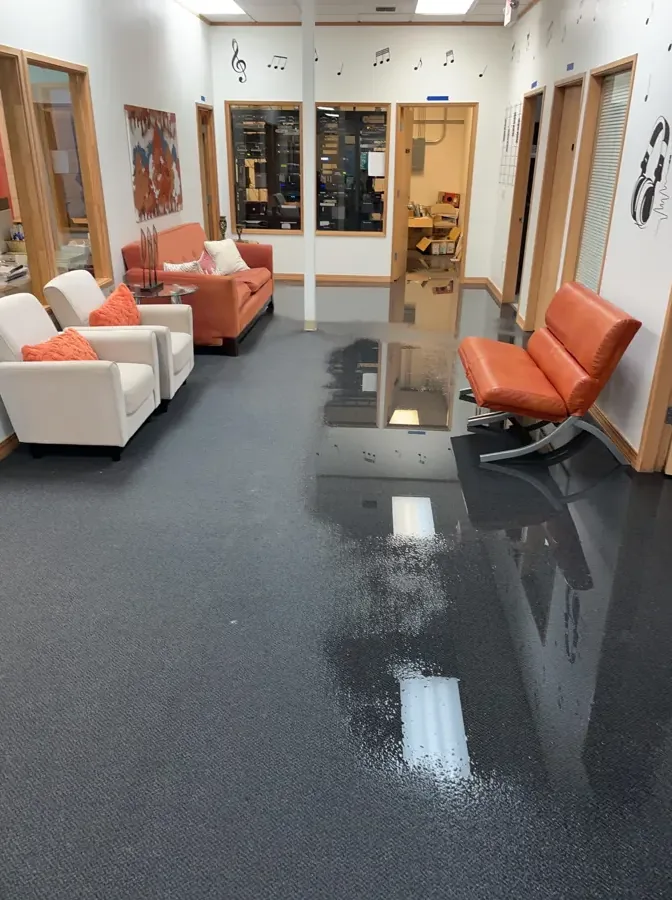
Commercial water damage in Wakefield affects more than the wet floor. A business may need to protect stock, preserve access and coordinate several occupants while the source is repaired. The restoration team begins with the affected building systems and the space that can safely remain in use.
The commercial water damage process
Set the building priorities
The crew meets the authorized contact, identifies wet zones and evaluates utilities, occupancy and safe access before extraction begins.
Remove water and protect routes
Extraction proceeds with planned hose paths and controlled material movement. Dry inventory and public areas stay outside the affected work zone.
Dry by assembly and zone
Equipment placement follows moisture maps and material access. The team reviews whether staged work is practical and records restrictions for each area.
Report measured progress
Daily readings and photographs support clear updates. The final record identifies verified areas and remaining repair or specialist work before reopening decisions.
Plan the work around the actual operation
A storefront, office and storage room have different contents and access needs. The crew records wet areas and identifies any electrical equipment or building services that require specialist evaluation. Property managers help clarify tenant boundaries and authorized work. The drying plan should state which routes remain available and which work zones require separation.
Main Street carries Route 129 through town, and the Lucius Beebe Memorial Library stands in the downtown area. Commercial losses around that corridor, Water Street or Greenwood require an inspection of the individual premises. The crew uses room layout and moisture readings rather than a generic business category to define mitigation.
- Identify an authorized site contact who can coordinate tenant access and scope decisions.
- Record affected stock before moving it so the inventory record preserves the original exposure.
- Keep exits clear of hoses and equipment throughout extraction and the later drying setup.
- Separate public routes from the work area with clearly communicated restrictions for affected rooms.
Wet business space needs a clear access and drying plan. The crew records affected rooms, equipment and material decisions for the authorized contact.
(888) 629-3140Discuss the business work zoneProtect dry operations without promising uninterrupted use
Containment and staged work can help separate a wet area, but safe occupancy depends on the building and loss conditions. The team evaluates contamination, electrical exposure and access before proposing phases. A manager receives a clear description of restrictions and likely equipment needs. Operational decisions remain tied to those findings and any authority requirements.
Equipment routes must preserve safe egress
Extraction hoses, cords and removed finishes can obstruct busy corridors. The crew plans those routes before work begins and keeps required exits usable. Wet electrical equipment, unstable ceilings and contaminated water require appropriate evaluation before staff or customers return to the affected zone, even when the visible water has been removed.
A useful loss file follows rooms and materials
The record groups photographs, readings and equipment by the affected area. That organization helps distinguish tenant contents, building finishes and source repairs. Daily updates explain changes to the drying setup and any newly discovered moisture. The closing record supports reconstruction planning without promising when business interruption ends or what the policy pays.
The Ready Business information supports continuity planning. The OSHA provides workplace safety information relevant to maintaining safe work areas.
Practical steps for commercial water damage
Name the site decision-maker
One authorized contact helps coordinate access, tenant communication and scope changes. The crew documents approvals and newly discovered damage as work progresses.
Separate stock from finishes
Inventory and building materials need distinct records. The team photographs affected contents before movement and keeps dry goods away from the disposal route.
Keep equipment visible
Cords and hoses receive deliberate routing in occupied buildings. The crew reviews paths as work changes so temporary drying does not create an avoidable obstruction.
Make updates actionable
Managers need room conditions, access limits and the next drying check. The report focuses on those facts instead of a vague promise that normal operations will resume immediately.
What does commercial water damage cost in Wakefield, MA?
Commercial water mitigation often starts around $2,500 and can exceed $15,000. Floor area, operating constraints, contamination and equipment needs drive the scope. Inventory replacement and reconstruction require separate evaluation.
Contained business area
$2,500 to $5,000
- Water removal
- Access planning
- Initial monitoring
Several work zones
$5,000 to $9,000
- Staged equipment
- Material removal
- Daily updates
Extensive building loss
$9,000 to $15,000+
- Broader logistics
- Multiple assemblies
- Detailed records
Water category, affected square footage, material class and the delay before drying all change the scope. These planning ranges are not a quote. Compare the Wakefield water damage cost calculator with the written on-site scope.
Commercial water damage coverage in Wakefield
Restoration coverage includes ZIP 01880, Greenwood, Downtown, Main Street, Water Street and homes around Lake Quannapowitt and Crystal Lake. The response team assesses the water source, affected materials and access before planning extraction and drying.
Nearby coverage reaches Reading, Melrose, Stoneham, Woburn, North Reading.
Related water damage services in Wakefield


Commercial Water Damage questions in Wakefield, MA
Can the business remain open during drying?
That depends on safe access, contamination, utilities and the work zone. Some losses permit staged work; others require an affected area to close. The restoration team explains the conditions and restrictions so the manager can make informed operational decisions with the relevant professionals.
Who authorizes work in a leased space?
The responsible parties depend on the lease and ownership arrangements. The crew needs an authorized contact for the mitigation scope and access. Clear communication between tenant and property manager helps separate building finishes, business contents and source repair responsibilities.
How is wet inventory documented?
Photographs and an itemized record should capture affected goods before disposal or relocation when safe. The team keeps contaminated items away from dry stock. Salvage decisions depend on material and exposure, while the insurer and business address valuation and coverage separately.
Will equipment block customers or staff?
The crew plans cords, hoses and equipment around safe routes, but some areas may remain restricted. Egress and electrical safety take priority over convenience. The access plan is reviewed as extraction ends, materials are removed and the drying setup changes.
What should a manager expect in updates?
Useful updates identify rooms still wet, readings that changed, equipment adjustments and the next inspection. Newly discovered damage should be explained with photographs. The report separates completed mitigation from specialist evaluation and reconstruction rather than presenting one unsupported reopening date.
Is after-hours commercial response available?
The response team maintains 24/7 dispatch for active water damage. The first discussion covers building access, authorized contacts, operating hours and hazards. Those details let the crew plan an assessment that respects the premises while prioritizing source control and safe removal.
Keep the recovery scope clear
The restoration team plans extraction and measured drying around the building, its occupants and its affected materials.
(888) 629-3140Arrange commercial loss assessment