Commercial Water Damage in Stoneham, MA
Water in a lobby or work area affects more than the wet floor. Commercial cleanup needs a defined work boundary, protected contents and a plan for equipment access through the building.
(888) 629-3140Review the business water damage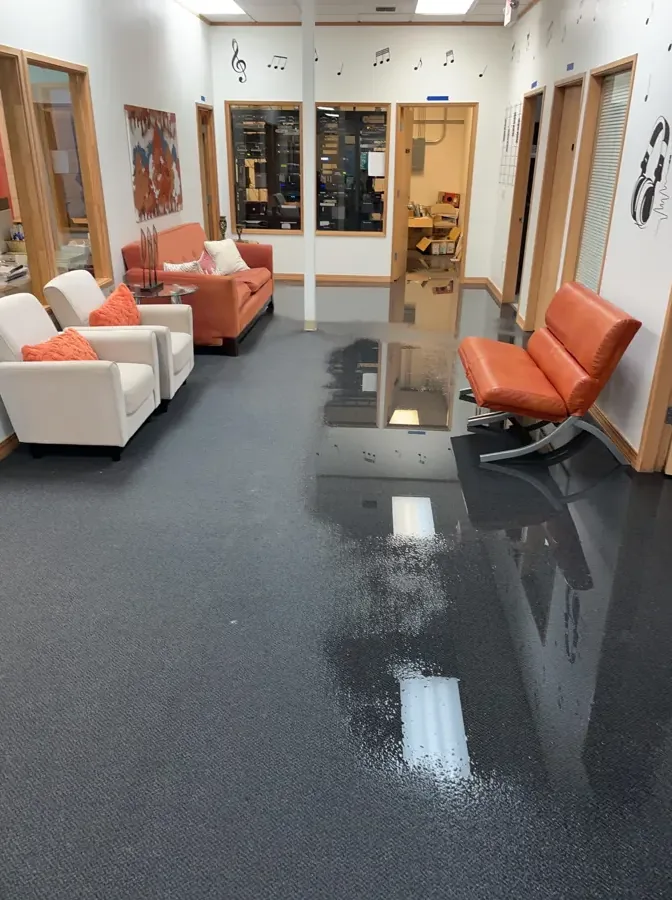
A business water release creates decisions about rooms, people and property at the same time. A wet entrance may affect access even when the source sits in a separate utility area. Commercial cleanup in Stoneham starts with the damage footprint and a clear understanding of who can authorize access and restoration work.
The commercial water damage process
Survey damage with building coordination
The team records wet rooms and access constraints while confirming the decision makers who can authorize material opening, equipment placement and any necessary contents movement.
Establish workable restoration zones
The plan identifies the water affected boundary and equipment routes, then explains which spaces require restrictions as extraction or removal exposes additional conditions.
Dry the recoverable building assemblies
Moisture control follows the affected flooring, partitions and concealed areas, with readings used to adjust equipment and document progress across the work zones.
Transfer records for subsequent repairs
Management receives a clear account of removed materials, retained assemblies and remaining source or finish work so other trades can plan the next stage.
Organize the building around the wet area
Main Street became the town center after roadway construction shifted activity from the Summer and Pleasant Street area. Today, an assessment along Main Street or Route 28 still needs the individual building layout: entrances, internal corridors, shared areas and the location of sensitive contents determine how work can proceed.
The mitigation team can identify a work boundary and explain where equipment, hoses and removed materials will travel. Building management should describe occupied spaces and any access constraints. Decisions about continued operations depend on actual safety and work conditions, including water contamination and the need to open affected assemblies.
- Identify the person responsible for authorizing work and coordinating building access.
- Record affected inventory, furnishings and equipment before planned contents movement.
- Keep wet work routes distinct from the access allowed for occupants.
- Communicate any changes when inspection reveals water beyond the initial room.
Water in a business needs a workable plan for the affected rooms, building access and contents before equipment or material removal changes the space.
(888) 629-3140Discuss the affected business areasFollow water through shared finishes
Connected flooring, partition bases and concealed service spaces can carry water outside the obvious pool. The survey should cover those transitions and explain whether neighboring rooms need readings or access. A limited source repair can leave a wider restoration task, especially where water reached finishes beneath fixed furnishings or equipment.
Business access is part of the work plan
Equipment placement should be coordinated with the agreed occupancy boundary. Water extraction clears the initial accumulation, while material removal and drying may require continuing access to affected areas after the open floor looks usable.
Make the repair handoff readable
Stoneham Public Works Water/Sewer Department maintains municipal facilities and the Highway Department manages municipal storm drainage. Suspected public infrastructure issues need the appropriate report, while the building source receives its own diagnosis. Restoration records should separate that repair from contents decisions, removed finishes and structural drying. A documented scope helps management coordinate subsequent work without losing track of concealed wet areas or unresolved access requirements.
Practical steps for commercial water damage
Set an initial access boundary
Keep staff and visitors outside water affected rooms until electrical, contamination and footing concerns are assessed; avoid directing traffic through the visible wet area.
Identify the building contact
Provide the person authorized to approve access and work, along with any management or tenant coordination needed before affected spaces can be inspected.
Record sensitive contents safely
Describe equipment, files and inventory in the wet area without powering devices or moving heavy items through water; planned handling can follow the assessment.
Explain operational constraints
Share the entrances, occupied rooms and building routes that matter to ongoing activity so the team can assess feasible equipment placement and work boundaries.
What does commercial water damage cost in Stoneham, MA?
Commercial cleanup costs in Stoneham reflect affected work zones, material access and contamination. These ranges describe restoration scales; specialized contents work, source repairs and rebuilding should be itemized when they extend beyond the mitigation scope.
Contained business area
$2,500 to $5,000
- Zone assessment
- Water extraction
- Localized material drying
Several work zones
$5,000 to $9,000
- Access coordination
- Partition checks
- Expanded drying arrangement
Extensive building loss
$9,000 to $15,000+
- Broader material handling
- Phased work planning
- Detailed restoration records
Water category, affected square footage, material class and the delay before drying all change the scope. These planning ranges are not a quote. Compare the water damage cost calculator with the written on-site scope.
Commercial water damage coverage in Stoneham
Commercial assessments serve buildings along Main Street, Route 28 and Pleasant Street. The initial description should include the affected business areas, building contact and access restrictions so inspection can account for both the water damage and the property's use.
The same service nearby: commercial water damage in Wakefield, Melrose, Woburn.
Related water damage services in Stoneham

Commercial Water Damage questions in Stoneham, MA
Can part of the building remain occupied?
That decision depends on safety, contamination, equipment routes and the work required in affected rooms. The team can explain a proposed work boundary after inspection. Occupancy should follow the actual building conditions rather than the fact that one entrance or room looks dry.
Who should approve the restoration scope?
The person with authority over the affected premises should coordinate approvals, with management and tenants involved as the building arrangement requires. Identifying that contact early helps resolve access and material decisions. The cleanup record should distinguish authorized work from tasks needing further coordination.
Should wet electronic equipment be turned on?
Wet devices should remain unused until appropriate specialists assess them. Operating equipment to test whether it still works can create additional hazards or damage. The restoration team can document the surrounding water footprint while the device itself receives the relevant equipment attention.
Why inspect rooms beyond the wet lobby?
Water can move beneath continuous flooring or through partition bases into connected spaces. A lobby puddle may reveal only the collection point. Checking nearby rooms and concealed transitions helps define a workable restoration scope before equipment is placed or finishes are replaced.
Can cleanup be arranged in stages?
Some buildings allow work zones or phases, while contamination and access may limit that option. Inspection determines whether staging is practical. Any phased plan should still address ongoing water entry and all affected materials, with clear boundaries and documented dependencies between the tasks.
What records help building management after drying?
Useful records identify the water source, affected rooms, contents handling, removed finishes and moisture findings for retained assemblies. They also distinguish completed mitigation from repair work still required. This helps management coordinate contractors and understand why particular areas remain restricted or unfinished.
Identify access and occupancy needs
The mitigation team can assess the building footprint and explain restoration zones, drying requirements and the records needed for a coordinated repair handoff.
(888) 629-3140Arrange a business damage assessment