Ceiling Leak Water Damage in Melrose, MA
A ceiling that sags or changes shape needs more than a bucket beneath it. Melrose ceiling restoration starts with overhead stability, then follows the source through the affected cavity.
(888) 629-3140Discuss the wet ceiling condition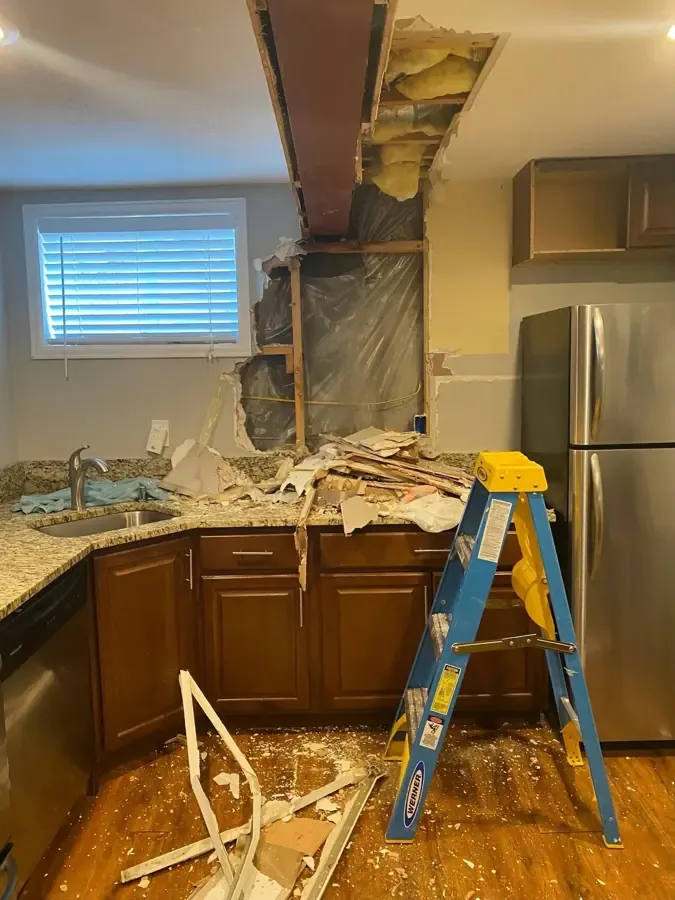
A ceiling mark near a light fixture raises different access concerns from a small stain above an empty corner. The inspection begins with the condition overhead and the space below. At properties along Grove Street, ceiling work may also need a route that keeps occupants away from falling material and wet electrical components.
The ceiling leak water damage process
Assess overhead stability
The crew assesses visible damage and access restrictions, coordinating electrical or source trade attention before anyone works beneath an unsafe ceiling section.
Trace the concealed release
Inspection relates the stain to upper rooms and accessible cavities, defining a source investigation and a practical boundary for opening affected materials.
Dry exposed retained layers
After necessary removal, measurements direct drying of framing and neighboring finishes, with access adjusted where damp material remains hidden from the initial opening.
Authorize the repair transition
Documented source status and material readings establish the handoff, while unfinished trade work and any remaining access requirement stay clearly identified for rebuilding.
Identify what is feeding the cavity
The source may be an upstairs fixture, concealed supply pipe or roof entry. Its location cannot be established from the stain's shape alone. The assessment compares the room above, the plumbing route and any weather related observations, then follows accessible moisture clues toward the actual release.
For a building near Upham Street, useful starting information includes which room sits above the damage and whether dripping changes with fixture use. Nearby Essex Street properties need the same source specific approach. Local access details help organize the visit; the ceiling construction and water path determine the restoration method.
A changing ceiling needs a safe inspection path and a traced source. Describe the overhead condition, the room above and any active dripping visible from a dry area.
(888) 629-3140Assess the ceiling before repairOpen only after the overhead risk is assessed
Saturated finish material can lose strength and separate from its supports. Occupants should not puncture a bulge or pull loose sections down. Controlled opening allows the crew to handle wet debris, inspect the cavity and protect the room beneath while preserving sound material where practical.
- Clear the area below unstable sections without passing beneath them.
- Include light fittings and other ceiling penetrations in the safety assessment.
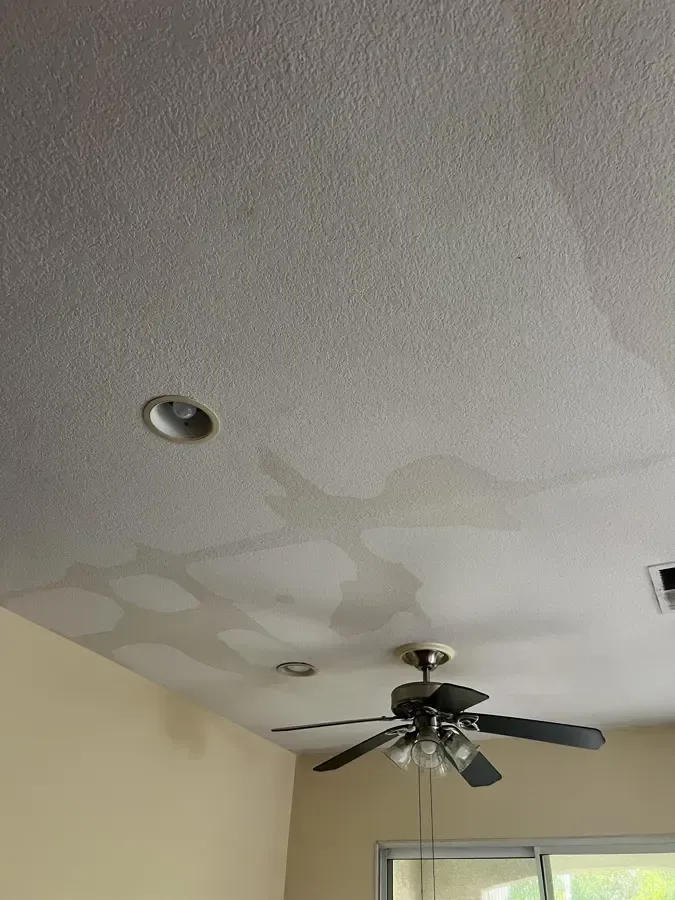
- Record the stain boundary before access work changes the visible pattern.
- Inspect retained backing, framing and insulation after the affected finish is opened.
Paint cannot resolve a wet ceiling cavity
Stain treatment belongs after source correction and material assessment. Structural drying addresses remaining moisture in accessible framing and adjoining layers. A fresh finish should not conceal a cavity whose condition has not been checked.
Plan the ceiling repair around retained materials
The handoff should explain what was removed, which materials stayed and whether the area above remains accessible for followup work. A plumber or roofer may need to verify the source repair before the ceiling is closed. The roof leak service covers overhead rain entry when the cause begins outside. Interior repair planning should also account for adjacent wall finishes that absorbed water from the same event.
Practical steps for ceiling leak water damage
Restrict the room below
A sagging ceiling or water near a fitting calls for a clear area underneath until the relevant professionals have assessed stability and electrical conditions.
Note the room above
The location of bathrooms, equipment or attic space above the mark helps the source investigation and reduces guesswork before the cavity is opened.
Preserve visible changes
Photographs taken safely can record widening stains, drips and finish movement, giving the crew a useful sequence without anyone touching or puncturing saturated material.
Keep access routes usable
A safe path for debris handling and equipment should remain available, with occupants and movable belongings kept outside the planned overhead work zone.
What does ceiling leak water damage cost in Melrose, MA?
Melrose ceiling restoration ranges depend on overhead access, cavity saturation and the extent of unstable finishes. The proposal should separate controlled removal and drying from source repairs, replacement ceiling materials and final decoration.
Localized stain
$900 to $1,800
- Source assessment
- Moisture mapping
- Finish assessment
Wet ceiling cavity
$1,800 to $3,200
- Controlled opening
- Layer inspection
- Directed drying
Broader overhead loss
$3,200 to $5,000+
- Room protection
- Material removal
- Repair handoff
Water category, affected square footage, material class and the delay before drying all change the scope. These planning ranges are not a quote. Compare the water damage cost calculator with the written on-site scope.
Ceiling leak water damage coverage in Melrose
Ceiling assessments include buildings along Grove Street, Upham Street and Essex Street. The work arrangement depends on overhead stability, occupied areas beneath the leak and access to the source in the room or cavity above.
The same service nearby: ceiling leak water damage in Wakefield, Stoneham, Reading.
Related water damage services in Melrose

Ceiling Leak Water Damage questions in Melrose, MA
Should a ceiling bulge be punctured to release water?
Occupants should keep clear rather than disturb unstable overhead material. The ceiling can release water and debris unexpectedly, and electrical components may be involved. Controlled access belongs after a professional assessment of the ceiling and the area beneath it.
Can a ceiling leak come from somewhere besides the roof?
Yes. Plumbing, fixtures and equipment above the room can release water into the cavity. The inspection relates the stain to the building layout and source conditions. A roofing repair is appropriate only when the investigation identifies exterior entry as the cause.
Why inspect the wall next to the ceiling damage?
Water can run along the ceiling assembly and enter the top of an adjoining wall. The wall face may look unaffected while material behind it remains damp. Checking connected finishes helps prevent a ceiling repair from leaving part of the release untreated.
Does every stain require an opening?
Access decisions depend on moisture findings, stability and whether the concealed area can be evaluated effectively. A sound finish may stay, while a saturated or unstable section may need removal. The scope should explain the reason for each proposed opening.
When can ceiling insulation be replaced?
Replacement follows source control and assessment of the retained assembly. Wet framing or backing needs appropriate drying before new insulation and finishes close it in. The crew should document the condition of the accessible layers and any remaining repair work first.
What helps prevent confusion between trades?
A clear handoff identifies the source repair, the opened ceiling sections and the drying results. It also lists work that remains for plumbing, roofing or finish contractors. That separation helps avoid closing an access point before all required inspections and repairs are complete.
Discuss the wet ceiling condition
The restoration plan can identify unstable sections, concealed moisture and the work needed before the ceiling is closed and decorated.
(888) 629-3140Plan controlled ceiling access