Burst Pipe Water Damage in North Reading, MA
Closing a valve stops new water, but the released water keeps spreading. North Reading burst pipe cleanup follows that movement through wall bases, floor layers and rooms below.
(888) 629-3140Discuss the pipe release damage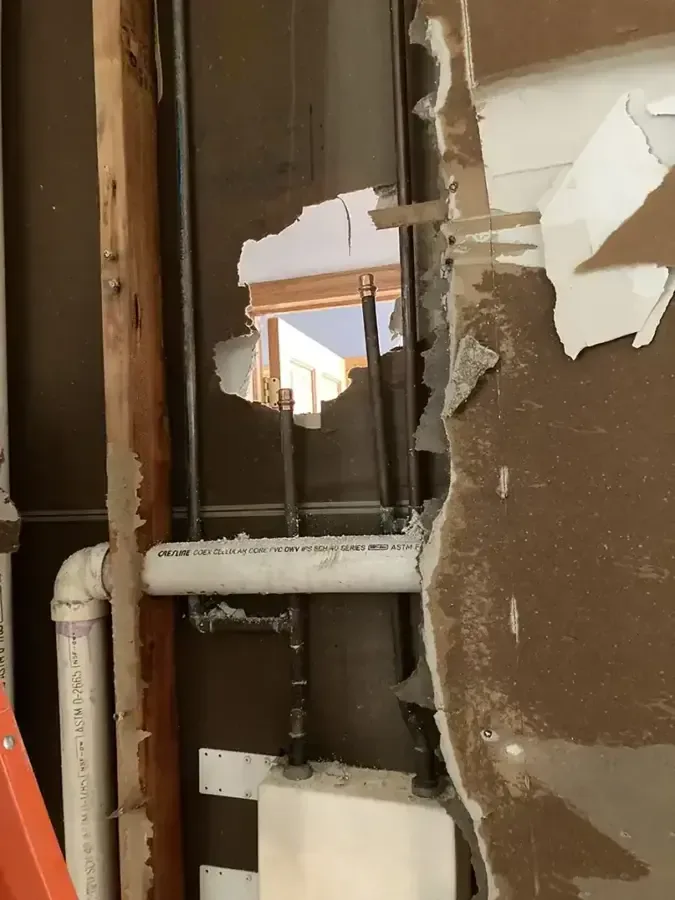
The break may occupy a small piece of pipe while the damage reaches several rooms. Pressurized water can fill a wall cavity, emerge at the floor and then pass through openings below. A useful mitigation plan reconstructs that route instead of focusing only on the repaired fitting.
The burst pipe water damage process
Map the release route
The restoration team combines visible damage with moisture checks to identify where water moved from the break into floors, walls and lower spaces.
Clear pooled water
Accessible liquid is removed and vulnerable contents receive handling decisions so the work area can be assessed without continuing contact with standing water.
Expose trapped wet layers
Selective openings allow inspection and drying where insulation, trim or floor coverings prevent access to materials that remain wet after surface removal.
Measure the dry-out
Repeated readings show how retained materials respond and support the decision to remove equipment or prepare the affected rooms for reconstruction.
Identify the shutoff and the repair responsibility
The North Reading Water Department maintains street mains and the service up to the shutoff near the property boundary. Owners maintain the service from that shutoff to the building. A plumber's source findings help distinguish private repair work from a municipal water concern.
For a home around Martins Landing, a building near Flint Memorial Library or a property along Chestnut Street, the interior assessment still begins with the actual rooms. Floor covering, wall access and the position of the break determine where the extraction crew looks next.
- Check below the failed pipe for ceiling staining and wet electrical fixtures.
- Follow floor transitions into closets and rooms that appear unaffected at first.
- Evaluate fixed cabinetry where the back or base may hide collected water.
- Document valve isolation and plumbing findings with the initial damage photographs.
A burst pipe in North Reading can leave a wet route through several assemblies even after the fitting has been repaired and the supply restored.
(888) 629-3140Review the release pathChoose access that reaches the wet layers
An opening used to repair the pipe may expose only part of a soaked cavity. Insulation, drywall edges and framing contact points can need additional evaluation. The mitigation team should describe the purpose of each proposed opening and explain which materials can remain during controlled drying.
Pressure restored is a plumbing milestone
A successful pipe repair allows the supply to operate again. Floors and walls soaked during the release need their own material assessment. Moisture checks and documented drying progress provide the separate information needed before those building finishes are repaired.
Keep the response organized across rooms
When water reaches a lower level, safe access and equipment placement may need to change. Water extraction removes pooled liquid before the broader drying stage. The North Reading Building Department requests room layouts for kitchen or bathroom remodeling, which becomes relevant when replacement work changes an existing arrangement. The loss record should distinguish restoring damaged finishes from any elective layout change and identify the remaining work clearly.
Practical steps for burst pipe water damage
Reach a safe shutoff
A reachable supply valve can limit further release, but occupants should not cross wet electrical areas or unstable floors to operate it during an emergency.
Look below from safety
From a dry location, note ceiling stains, active drips and affected light fixtures beneath the break. Keep people out of rooms with sagging overhead surfaces.
Describe the release path
List the room containing the pipe and adjoining or lower rooms that became wet. Include closets and built-in cabinets when explaining the visible spread.
Retain the plumbing findings
The repaired component, photographs and source diagnosis help connect the initial failure with the mitigation scope and later discussions about finish replacement or insurance.
What does burst pipe water damage cost in North Reading, MA?
Burst pipe cleanup in North Reading depends on the release path, not just the pipe repair. Concealed cavities, several affected levels and saturated built-ins can increase mitigation work beyond a contained room loss.
One-room release
$1,200 to $2,500
- Local extraction setup
- Room moisture map
- Initial equipment
Concealed spread
$2,500 to $4,500
- Cavity access assessment
- Wet layer evaluation
- Drying adjustments
Several floors
$4,500 to $7,000+
- Connected level checks
- Expanded removal work
- Material progress records
Water category, affected square footage, material class and the delay before drying all change the scope. These planning ranges are not a quote. Compare the water damage cost calculator with the written on-site scope.
Burst pipe water damage coverage in North Reading
Pipe release assessments extend to properties near Flint Memorial Library, Martins Pond and Chestnut Street. Explain where the break occurred and which lower or adjoining rooms became wet, including any ceiling or electrical access concerns.
The same service nearby: burst pipe water damage in Wakefield, Reading, Stoneham.
Water damage restoration in North Reading · every town covered
Related water damage services in North Reading

Burst Pipe Water Damage questions in North Reading, MA
What should happen after the valve closes?
The damaged pipe needs qualified repair and the wet building materials need assessment. Water already released can keep moving through cavities and floor layers. Document visible spread from a safe position and arrange mitigation for the affected rooms and spaces below.
Why inspect the ceiling on the lower floor?
Water from a higher pipe can follow framing or service openings into a ceiling below. A lower room may show damage after the original room is wiped dry. Checking that route helps identify unstable finishes and hidden moisture requiring access.
Can the plumber's opening be used for drying?
Sometimes the repair opening provides useful access, but its size and location may leave wet materials enclosed. The drying team should evaluate the surrounding cavity and explain any additional opening. The goal is access to actual moisture rather than unnecessary demolition.
Does every damp wall section need replacement?
Material condition, contamination and access determine retention. Some assemblies can be dried after selective opening; others are damaged beyond practical retention. The proposal should explain which sections are removed and which remain, with moisture checks supporting the drying plan.
Can water service return before the rooms are dry?
A plumber can determine when the repaired supply is ready for operation. Restoration may continue afterward because the structure retains moisture. Safe occupancy and equipment arrangements should be discussed separately, especially if electrical hazards or open cavities remain in living spaces.
How can a loss across several rooms be documented?
Room photographs, a sketch of affected areas and material readings help organize the record. Keep the source repair details with removal and drying documentation. A clear sequence makes it easier to distinguish the original release from later repair or reconstruction work.
Describe water above and below the break
Share the shutoff status, room layout and visible damage so the mitigation plan follows the water through the building.
(888) 629-3140Arrange a pipe damage assessment