Burst Pipe Water Damage in Reading, MA
A pipe break can send water down framing before a puddle appears. Reading burst pipe recovery follows that hidden route, separating the plumbing repair from removal and drying of soaked assemblies.
(888) 629-3140Describe the pipe break damage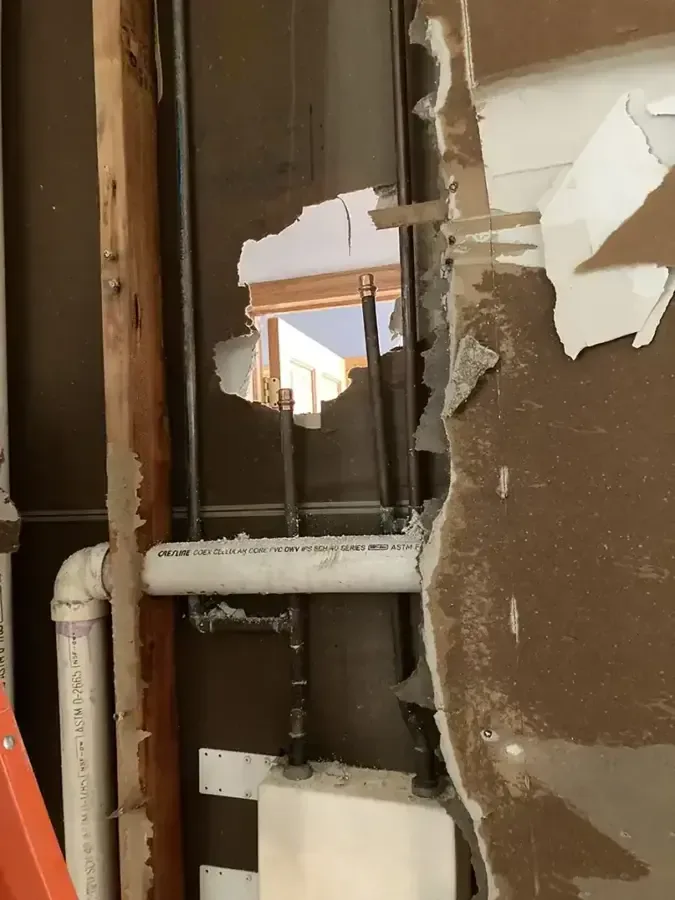
The loud part of a pipe break may stop as soon as a valve closes, but water already inside the building continues moving. It can follow framing, cross a floor edge and collect in the ceiling below. Inspection begins with the break and follows those routes before the damage boundary is set.
The burst pipe water damage process
Confirm the supply release status
The initial assessment records whether leakage has stopped and whether plumbing repair is complete, keeping active source control separate from the interior restoration plan.
Trace movement through connected spaces
Inspection follows framing and floor penetrations into adjoining rooms, marking moisture locations and identifying overhead or electrical concerns that affect safe access.
Recover the affected material layers
Accessible liquid is removed and unsuitable wet layers are opened or removed, creating a workable drying path for components that can remain in place.
Check retained assemblies before closure
Repeat material observations establish progress and remaining wet locations, with the final record identifying any repair tasks outside the completed water mitigation scope.
Distinguish municipal supply from building damage
The Water Distribution Division operates and maintains the municipal distribution system, while the Water Division oversees meters. A broken pipe inside a property requires identification of the damaged component and appropriate source repair. The restoration scope then addresses water released into the building, including rooms away from the repair opening.
At a Washington Street property or a business on Walker's Brook Road, the nearest visible puddle may not be the lowest wet point. The team checks service penetrations, wall bottoms and ceiling changes along the route. The layout determines access needs, rather than an assumption about the age or material of household pipes.
- Note the location of the repaired break before the wall opening is covered.
- Inspect the ceiling beneath any upper floor release for sagging or trapped water.
- Trace damp flooring around partitions that may redirect the flow into another room.
- Identify stored contents blocking inspection of the lowest wet wall and floor edges.
After a pipe breaks in Reading, a useful assessment connects the repaired source with every room and concealed layer that received escaping water.
(888) 629-3140Check the pipe release pathDo not confuse plumbing access with drying access
A small opening may allow the plumber to replace a fitting while leaving a much larger wet cavity enclosed. The drying team evaluates insulation, wallboard and framing separately. Access should be large enough for the required material work, with the reason for each removal explained in the scope.
Preserve the source repair record
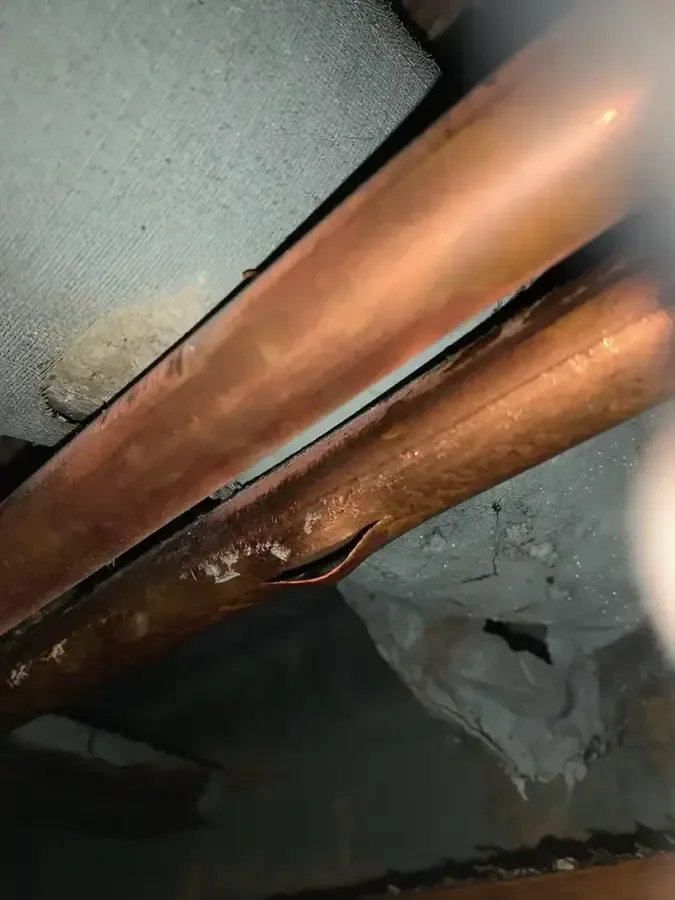
A photograph of the failed component and the plumber's description can connect the release to the damage map. Keeping that record with moisture observations helps explain why a room below the break needed work even when the repaired pipe was elsewhere.
Track the rooms that received escaping water
Wood End inspections follow the same practical sequence: identify the source, map affected layers and verify progress in retained materials. Ceiling leak cleanup addresses overhead damage along that route. Structural drying continues after extraction, with repeat checks at marked locations rather than reliance on the newly quiet pipe.
Practical steps for burst pipe water damage
Find a safe shutoff route
A reachable supply valve can limit the release, but occupants should not enter water near electrical equipment or unstable overhead finishes to reach it.
Check the room below remotely
From an unaffected doorway, note new ceiling stains or dripping beneath the suspected pipe break and keep people away from any sagging overhead area.
Keep the repair details
Retain the plumber's description and photographs of the damaged component so source correction can be connected with the documented spread through the building.
Open access to adjoining rooms
Provide keys and building contacts for spaces beside or below the leak, allowing the inspection to follow water beyond the initial repair location.
What does burst pipe water damage cost in Reading, MA?
Burst pipe cleanup in Reading depends on the water path, cavity access and number of affected assemblies. Pipe repair, mitigation and replacement finishes should appear as distinct tasks so the estimate remains understandable.
One-room release
$1,200 to $2,500
- Water removal
- Boundary checks
- Focused drying
Concealed spread
$2,500 to $4,500
- Cavity access
- Insulation check
- Material monitoring
Several floors
$4,500 to $7,000+
- Vertical inspection
- Broader equipment
- Room records
Water category, affected square footage, material class and the delay before drying all change the scope. These planning ranges are not a quote. Compare the water damage cost calculator with the written on-site scope.
Burst pipe water damage coverage in Reading
Pipe release inspections include Washington Street, Wood End and the commercial properties around Walker's Brook Road. Information about upper rooms, locked service spaces and shared entries helps the team trace the full interior water path.
The same service nearby: burst pipe water damage in Wakefield, Stoneham, North Reading.
Related water damage services in Reading

Burst Pipe Water Damage questions in Reading, MA
Why is another room wet after the valve closes?
Water already inside a wall or floor assembly can continue draining after the supply stops. The inspection follows that stored moisture and checks lower collection points. Continued wetting should be evaluated to distinguish residual drainage from a source that remains active.
Is the plumber responsible for all drying?
Plumbing repair corrects the damaged supply component. Drying involves the building materials reached by its water and may require different equipment or access. The written scope should explain who handles each task and how source correction will be documented.
Can the pipe repair opening be closed immediately?
The cavity should first be assessed for wet insulation, wallboard and framing. Surrounding materials need moisture checks after pipe repair and before the cavity is enclosed. Closure follows suitable material conditions and any separate repair requirements for the affected wall or ceiling.
What should happen to soaked insulation?
Its condition, contamination and ability to dry within the assembly determine the decision. Wet insulation can obstruct recovery of adjacent framing. The team should document whether it remains suitable or requires removal to provide effective access for drying and cleaning.
Does clean supply water need inspection?
Yes. Once released, water can travel through dusty cavities, flooring layers or stored contents. Inspection considers both the source and what it contacted. It also establishes the hidden moisture footprint, which can be larger than the visible spill around the pipe.
Can residents occupy unaffected rooms?
That depends on safe access, utilities, overhead conditions and separation from the work area. The assessment should identify usable routes and any restrictions. Occupancy decisions need to account for the building as it stands during cleanup, including openings and equipment placement.
Identify rooms beneath the break
Describe where the pipe failed, whether the supply is isolated and any new ceiling or floor changes outside the original room.
(888) 629-3140Discuss the concealed water spread