Water Heater Leak Cleanup in Reading, MA
The tank may be replaced while water remains beneath its platform. Reading water heater cleanup checks the equipment footprint, adjacent wall bases and the rooms reached by the release before finish repairs begin.
(888) 629-3140Discuss water around the tank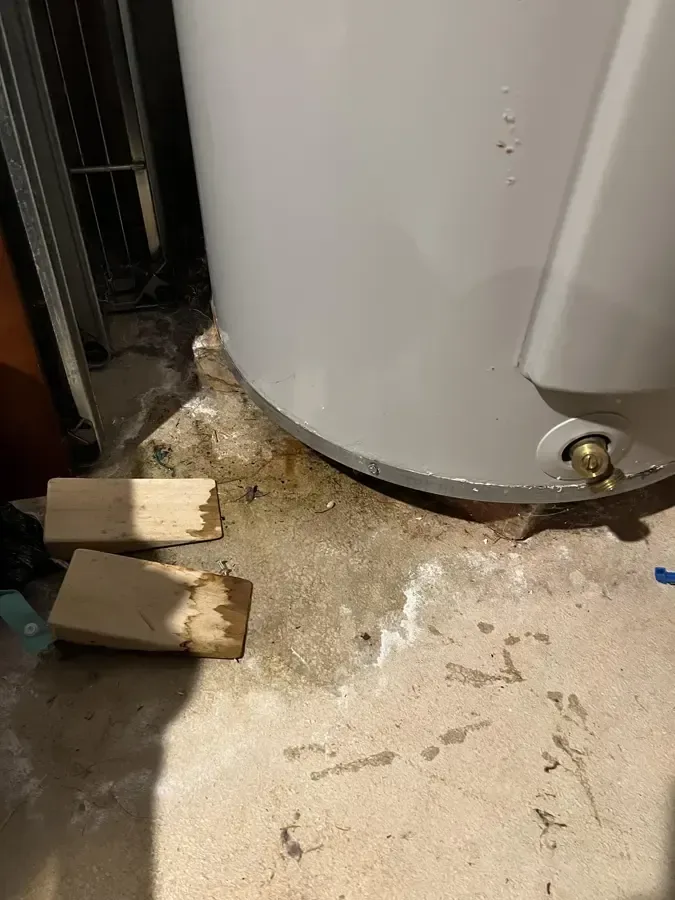
A utility floor can direct leaking tank water beneath a nearby partition before it creates a large pool around the heater. Replacing the appliance corrects only part of that problem. The surrounding floor, platform and stored contents need evaluation so the new equipment does not conceal an unfinished wet area.
The water heater leak cleanup process
Establish safe equipment coordination
The assessment records the source status and the planned heater work, ensuring the utility area can be approached without interfering with necessary isolation or repair.
Inspect the complete equipment footprint
Accessible surfaces and newly uncovered areas are checked for retained water, including platform edges, floor seams and partitions adjoining the original tank position.
Dry beyond the visible puddle
Extraction and selective material work address the observed spread, with equipment arranged to reach retained components outside the immediate circle around the heater.
Record the building recovery condition
Floor and support observations are recorded with unfinished repairs, keeping the building recovery tasks distinct from the heater professional's equipment service.
Coordinate equipment work with access to the floor
The Water Division oversees meter installation and repair. A leaking tank inside a building requires its own equipment assessment, followed by inspection of the materials reached by the release. The restoration team should know when the heater will be disconnected or moved so inaccessible surfaces can be checked safely.
For condominiums on Bear Hill Street, that coordination can involve a building contact as well as the equipment professional. At a Wood End property, stored contents may instead be the main obstacle. The access plan should identify who handles the heater and how the wet footprint beneath it will be evaluated.
- Record where water escapes from the equipment area and meets adjacent wall finishes.
- Check platform edges for swelling or moisture hidden behind decorative or protective trim.
- Separate wet storage from dry items without blocking utility service access.
- Inspect the exposed floor before replacement equipment covers the original tank footprint.
A leaking heater in Reading can affect more than the appliance footprint. The recovery plan should include the supports, nearby partitions and floor seams that received water.
(888) 629-3140Check the utility room damageFollow the low route into nearby rooms
A shallow release can enter seams beneath floor coverings or collect behind shelving. In a Washington Street utility room, the inspection boundary depends on those actual routes. The team looks beyond the visible tank perimeter and documents water that reached adjoining finishes, including materials with no obvious surface stain.
Tank removal creates an inspection opportunity
The period between removing old equipment and setting the replacement can expose wet areas that were previously unreachable. Scheduling inspection at that stage helps distinguish a dry supporting surface from a platform or floor layer that needs more work before the new tank is placed.
Keep the equipment and building scopes distinct
The written plan should separate heater correction from water extraction, finish removal and structural drying. Condition records for the platform, wall bases and adjoining floor explain the restoration work. They also give the owner a clearer account of what remains after the equipment itself is operating again.
Practical steps for water heater leak cleanup
Avoid handling wet utility controls
Hot surfaces and wet powered equipment need qualified attention. Occupants should not reach through pooled water or move the heater to investigate the source of leakage.
Arrange the tank source assessment
The equipment professional should identify the failure and safe isolation method, while the restoration discussion identifies which surrounding building materials were reached by escaping water.
Describe the room beyond the tank
Note adjoining doors, wall edges and damp storage, including water that has appeared outside the utility area rather than only around the heater base.
Preserve access during replacement
Coordinate inspection of the uncovered footprint before another tank is placed, allowing the platform and floor condition to be assessed while those surfaces remain visible.
What does water heater leak cleanup cost in Reading, MA?
Reading water heater cleanup costs depend on the wet floor area, platform construction and spread into adjoining finishes. Heater repair or replacement should be priced distinctly from water removal, material access and drying work.
Accessible utility floor
$800 to $1,600
- Floor extraction
- Perimeter readings
- Surface checks
Walls and platform
$1,600 to $2,900
- Support inspection
- Trim access
- Focused equipment
Adjoining rooms
$2,900 to $4,500+
- Spread mapping
- Finish handling
- Moisture followup
Water category, affected square footage, material class and the delay before drying all change the scope. These planning ranges are not a quote. Compare the water damage cost calculator with the written on-site scope.
Water heater leak cleanup coverage in Reading
Utility room assessments extend across Wood End, Bear Hill Street and Washington Street. Access arrangements and the timing of heater removal help the team evaluate concealed floor areas before replacement equipment occupies the same footprint.
The same service nearby: water heater leak cleanup in Wakefield, Stoneham, North Reading.
Related water damage services in Reading

Water Heater Leak Cleanup questions in Reading, MA
Does replacing the tank solve the water damage?
Replacement addresses the equipment failure, while water already in flooring, platforms or partitions needs separate assessment. Some of those materials may be hidden once the new heater is installed. Coordinating inspection before placement helps identify the full building recovery scope.
Can the heater be moved for cleanup?
Moving or disconnecting the heater requires appropriate equipment expertise and safe utility handling. The restoration plan should coordinate that work instead of treating the tank as ordinary movable furniture. Once exposed, its footprint can be inspected for trapped water and damaged supports.
Why is the platform part of the assessment?
A platform can conceal moisture along its base or within absorbent components. Its surface may look dry while adjoining trim or underlying material remains wet. Inspection should identify its construction and condition before replacement equipment or new finishes hide those areas.
What if the utility floor is unfinished concrete?
Concrete does not eliminate damage to adjacent materials. Water may reach wallboard, stored contents, wood supports or another room through floor seams. The inspection should follow that route and distinguish the exposed floor from absorbent materials that require additional recovery work.
Should wet boxes be moved into another room?
Moving soaked packaging can transfer water to clean finishes and obscure the original damage path. Contents handling should be planned around a protected route and suitable staging area. Photographs can document the condition before packaging or damaged belongings are removed.
How should the repair estimate be organized?
The estimate should identify equipment correction, water removal, material access, drying and replacement finishes as distinct tasks. That makes it easier to understand which contractor handles each part and whether concealed areas beneath the tank or platform remain to be assessed.
Explain planned tank replacement
Describe water beyond the heater, affected storage and planned equipment work so the exposed floor can be checked at the right stage.
(888) 629-3140Discuss the wet tank platform