Appliance Leak Water Damage in Stoneham, MA
A dishwasher or washer can hide its first leak beneath the machine. Once water appears at a cabinet edge or doorway, cleanup needs to examine the covered flooring and connections behind it.
(888) 629-3140Assess the appliance water path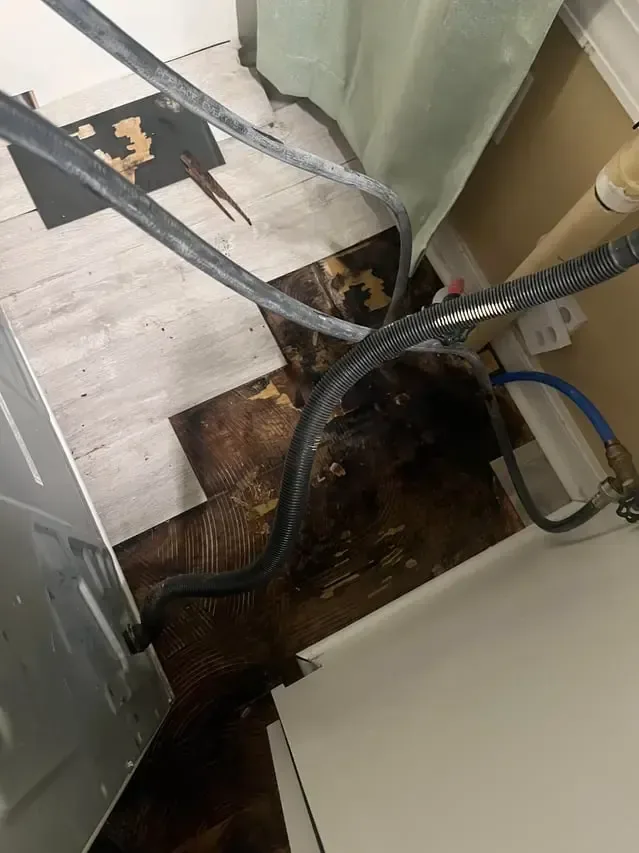
A wet toe kick may be the first sign of a dishwasher release that started behind the cabinet front. A washer hose leak can similarly wet the floor beneath the machine before spreading into view. Stoneham appliance cleanup begins by distinguishing supply water from used discharge and tracing what each reached.
The appliance leak water damage process
Relate the leak to appliance use
The assessment records the water condition and equipment findings, then maps the release from the machine footprint into surrounding cabinets, walls or flooring.
Plan access behind fixed finishes
The team coordinates appliance movement and selective openings so hidden wet layers can be inspected without treating every visible cabinet surface as the boundary.
Remove unsuitable affected materials
Decisions account for contamination, swelling and the feasibility of drying each layer, with the reason for any removal explained before work proceeds.
Verify the concealed drying result
Moisture checks include the previously hidden locations so the repair handoff addresses cabinet bases and subfloors as well as the open room.
Expose the hidden starting area safely
Equipment movement can reveal the original leak location and the condition of the flooring below. It also involves connections and potentially wet electrical components. The appliance repair professional and mitigation team should coordinate that access so a machine is not pulled across damaged flooring or disconnected while its utilities remain unsafe.
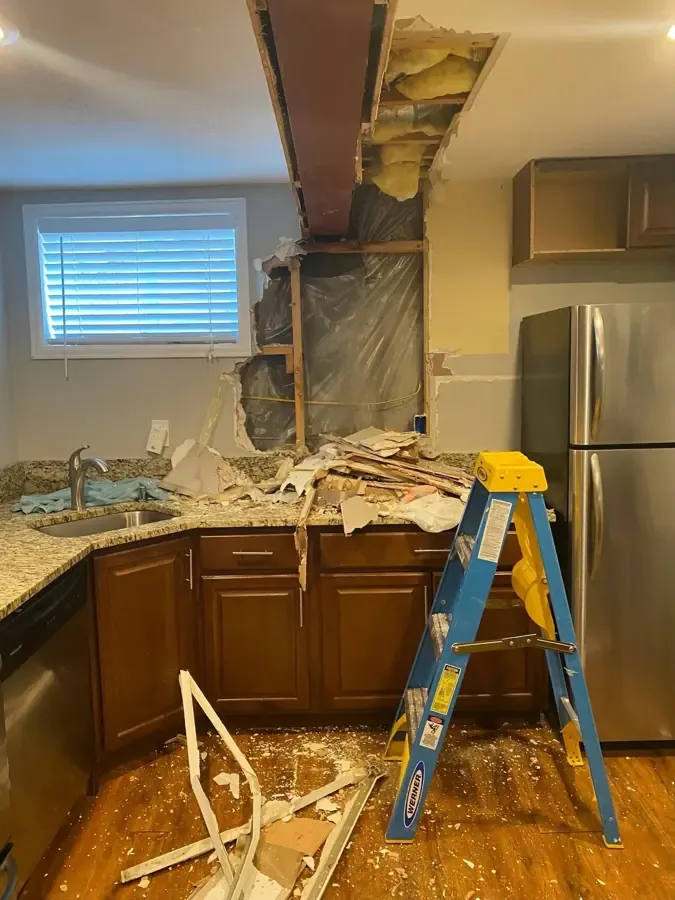
At properties near Colonial Park School, Main Street or Stoneham Central Middle School, the kitchen or laundry layout sets the inspection route. A cabinet enclosure can hide water at wall bottoms, while an upstairs machine may send it into the ceiling below. Each visible symptom helps identify a connected area to examine.
- Identify whether the leak occurred while filling, washing or draining.
- Check cabinet bottoms and removable access areas for absorbed moisture.
- Inspect flooring seams outside the appliance footprint and at nearby doorways.
- Record any staining below a laundry or kitchen located over another room.
A kitchen or laundry leak deserves inspection beneath the machine and adjoining finishes. The puddle may reveal only the edge of the affected assembly.
(888) 629-3140Discuss hidden appliance water damageChoose handling from the water and material condition
Used wash water calls for a different contamination assessment from a fresh inlet release. Cabinet panels, underlay and absorbent finishes may not respond the same way to cleaning or drying. The plan should explain which layers are suitable to retain and whether removal is required to reach the wet surface beneath them.
A functioning machine can leave a wet cabinet
Replacing a hose or fixing a drain connection stops the equipment problem but does not restore the surrounding materials. If water reached the room below, ceiling leak cleanup addresses that separate overhead assembly.
Check access before declaring the area dry
Stoneham Public Works Water/Sewer Department maintains municipal systems and oversees the water service backflow device program. Stoneham Police Department receives after hours public water and sewer emergency reports. An appliance leak requires the appropriate equipment diagnosis, paired with inspection of the interior finishes it soaked.
After water pickup and material decisions, structural drying evaluates retained layers. A dry kitchen walkway does not finish the assessment when moisture remains beneath a fixed cabinet. Documentation should include those concealed locations and any access still needed before repairs proceed.
Practical steps for appliance leak water damage
Stop the appliance cycle safely
Discontinue use when a leak appears, while avoiding wet switches, plugs or nearby electrical components; unsafe equipment access needs appropriate professional assessment.
Describe when water appears
Note whether the release starts during filling or draining and whether it continues after the machine stops, helping focus the equipment diagnosis.
Keep the machine in place
Do not drag a connected appliance across swollen flooring; coordinated movement protects utilities and allows the wet area underneath to be examined deliberately.
Check adjacent visible symptoms
From dry areas, note cabinet swelling, lifting floor joints and ceiling stains below so the restoration survey includes more than the appliance's immediate footprint.
What does appliance leak water damage cost in Stoneham, MA?
Appliance cleanup costs in Stoneham depend on water condition and concealed spread beneath flooring or cabinets. These ranges cover mitigation scopes; appliance repairs and replacement cabinetry may require separately described work after inspection.
Small laundry release
$700 to $1,400
- Water pickup
- Hose area survey
- Focused drying
Cabinet-area loss
$1,400 to $2,600
- Cabinet base inspection
- Layer access
- Material evaluation
Water between floors
$2,600 to $4,000+
- Lower ceiling survey
- Connected cavity drying
- Repair scope records
Water category, affected square footage, material class and the delay before drying all change the scope. These planning ranges are not a quote. Compare the water damage cost calculator with the written on-site scope.
Appliance leak water damage coverage in Stoneham
Appliance water damage assessments serve properties around Colonial Park School, Main Street and Stoneham Central Middle School. Information about the machine, operating stage and rooms below it helps the team plan access and identify the likely inspection areas.
The same service nearby: appliance leak water damage in Wakefield, Melrose, Woburn.
Related water damage services in Stoneham

Appliance Leak Water Damage questions in Stoneham, MA
Is a dishwasher leak treated like a supply hose leak?
The cleanup depends on the water involved. An inlet connection may release supply water, while a drain or wash cycle can release used water. That distinction influences contamination handling and material decisions, so the source should be diagnosed before choosing the cleanup approach.
Can a cabinet stay if its front looks normal?
The visible front may remain intact while the bottom or back has absorbed water. Inspection needs access to the affected portions of the cabinet. Retention depends on material condition and the ability to dry and check the areas concealed behind the finished face.
Why does flooring buckle after a small leak?
Water can enter joints and reach layers that absorb moisture or change shape. The amount visible beside the appliance may understate what traveled underneath. Assessment examines the floor assembly and wet boundary before deciding whether drying or material replacement is appropriate.
Should an owner disconnect the machine immediately?
Wet connections and electrical components can make disconnection unsafe. The machine should stop being used, and appropriate equipment or electrical assistance should address unsafe utilities. Appliance movement is best coordinated with the damage assessment so the original wet footprint can also be documented.
Does a repaired hose mean the laundry is ready?
A hose repair addresses the release source. Water already beneath the washer, flooring or adjoining walls needs separate evaluation. The room is ready for restoration only after affected materials have been assessed and the retained assembly reaches suitable conditions for any planned repairs.
What if there is a stain in the room below?
A lower ceiling stain suggests water may have passed through the floor assembly. The inspection should include that ceiling and accessible cavity, with precautions for weakened overhead material. The upper appliance repair and lower room cleanup need to be connected in the work record.
Explain when the machine leaked
The restoration team can assess covered flooring, cabinets and connected rooms while the appliance fault receives the appropriate equipment repair.
(888) 629-3140Review the appliance leak footprint