Burst Pipe Water Damage in Melrose, MA
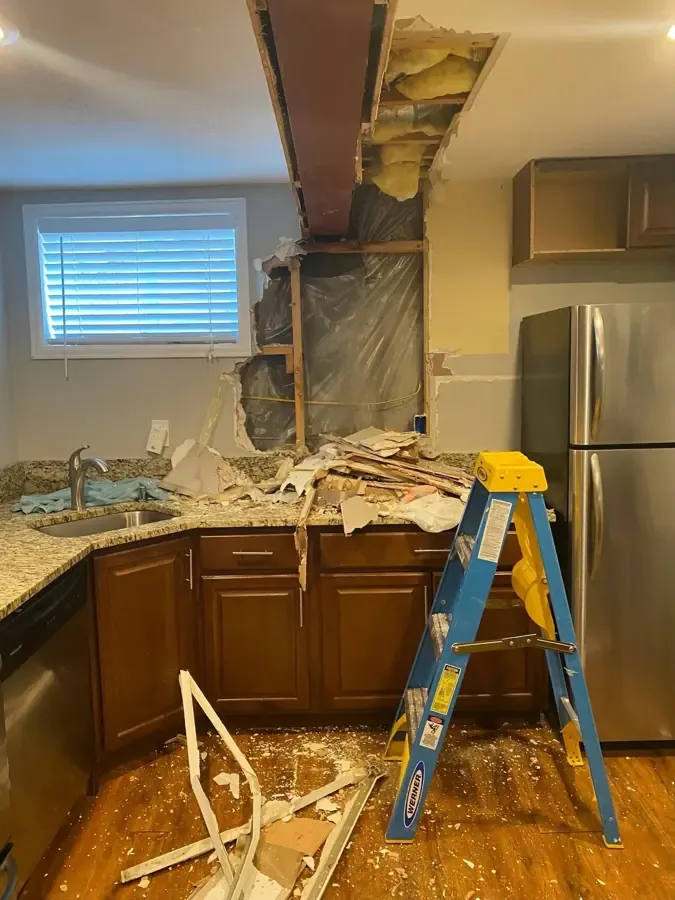
Water from a ruptured supply can escape far beyond the broken fitting. Melrose pipe damage restoration follows that indoor route, including closed cavities and rooms beneath the original release.
(888) 629-3140Discuss the pipe release path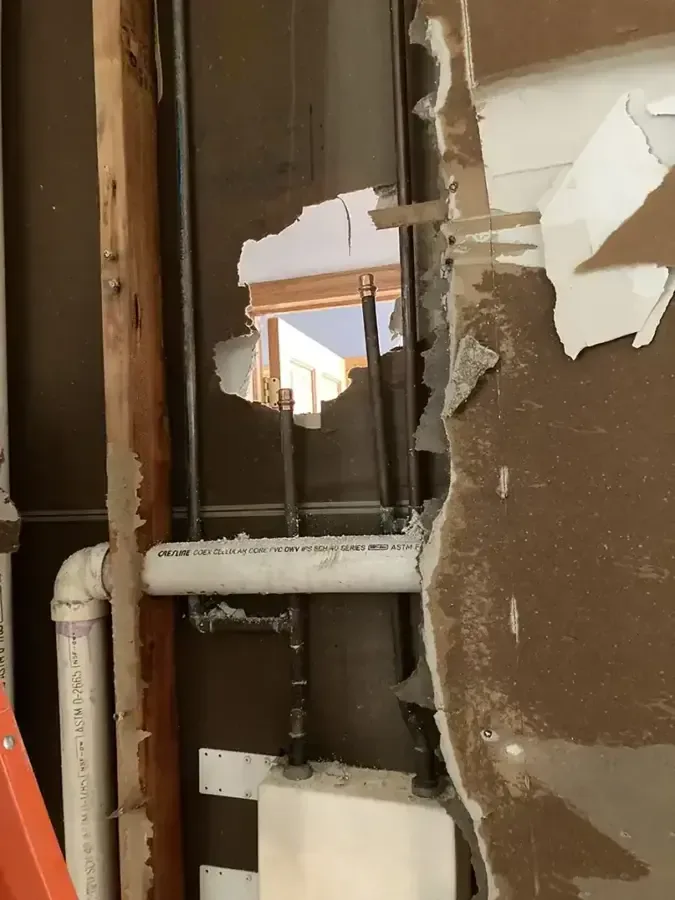
The Water and Sewer Division maintains the municipal water system, while a supply rupture inside a property requires direct attention to the building's shutoff and damaged pipe. Restoration begins with the released water, which may have crossed a floor, entered a partition or drained through an opening before the source was isolated.
The burst pipe water damage process
Trace the supply release
Inspection connects the rupture location with wet surfaces above, beside and below it, establishing a complete damage map before major material removal begins.
Recover water and expose cavities
Extraction addresses accessible water, while selective opening reveals wet layers that cannot be assessed or dried effectively through the existing wall or ceiling finish.
Adjust the drying arrangement
Readings show how retained wood and adjacent finishes respond, allowing equipment placement and access openings to change when hidden moisture persists in the assembly.
Prepare the rebuilding record
The final account separates source repair verification from material drying results and lists replacement work still needed across every affected room and building level.
Draw the path through the building
At a property near Wyoming Hill, a wet room below the rupture may require as much attention as the source room. Water follows seams around pipe penetrations and can emerge away from the original break. Photographs and measurements establish that route before broad removal changes the visible clues.
Melrose/Cedar Park is another useful access reference, but the indoor survey remains specific to each building. A ceiling stain, damp baseboard and swollen cabinet may belong to the same release. Treating those signs as separate cosmetic defects can leave part of the water path untreated.
A repaired pipe can leave wet materials on several levels. Describe the rupture location and the rooms where water appeared before and after the supply was isolated.
(888) 629-3140Map the released waterCoordinate access around pipe repair
The plumber needs access to the failed section and a way to verify the repair. The restoration team needs access to soaked layers around it. These openings should be coordinated so new wallboard does not close a wet cavity and equipment does not obstruct essential source work.
- Inspect vertical spaces below the rupture for hidden water movement.
- Check flooring at transitions where water can reach a different backing.
- Identify wet insulation that blocks inspection or effective cavity drying.
- Label retained trim and reusable components removed for access to damaged materials.
Pressure restored is not a drying endpoint
A successful repair permits the supply system to operate again. Soaked wallboard and wood still need their own moisture assessment. Cavity drying continues according to material readings after the plumbing problem is corrected.
Close the project with material records
For properties around Pine Banks Park, the repair handoff should identify which rooms were checked and where measurements were taken. Unreachable sections need explicit attention before finishes are restored. The water extraction service addresses bulk water early in the loss, while the final documentation explains the retained materials and any remaining replacement work.
Practical steps for burst pipe water damage
Find safe isolation access
The building contact should locate a reachable water shutoff from a dry area, with the plumbing trade handling isolation when equipment or access conditions are unsafe.
Avoid the space below
Rooms beneath a heavy ceiling leak should remain unused until overhead stability and electrical conditions have been assessed by the appropriate professionals.
Note the release sequence
The first wet location, time of discovery and any change after shutoff help the team connect visible damage across floors without relying on the stain alone.
Keep repair access available
Furniture and stored objects can be moved from a safe approach so the plumber and restoration crew can reach the affected assembly without unnecessary handling delays.
What does burst pipe water damage cost in Melrose, MA?
Melrose burst pipe cleanup ranges depend on the release path, concealed moisture and number of affected assemblies. Written scopes should distinguish extraction and drying from pipe repair, electrical work and replacement of damaged finishes.
One-room release
$1,200 to $2,500
- Water recovery
- Room mapping
- Targeted drying
Concealed spread
$2,500 to $4,500
- Cavity access
- Insulation assessment
- Repeated measurements
Several floors
$4,500 to $7,000+
- Vertical survey
- Coordinated removal
- Multiple drying areas
Water category, affected square footage, material class and the delay before drying all change the scope. These planning ranges are not a quote. Compare the water damage cost calculator with the written on-site scope.
Burst pipe water damage coverage in Melrose
Burst pipe restoration covers buildings near Wyoming Hill, Melrose/Cedar Park and Pine Banks Park. The survey follows the supply release through connected indoor spaces, with access planned around occupied rooms and plumbing repairs.
The same service nearby: burst pipe water damage in Wakefield, Stoneham, Reading.
Related water damage services in Melrose

Burst Pipe Water Damage questions in Melrose, MA
Why is the room below the leak inspected?
A supply release can pass through floor penetrations and wall cavities before becoming visible. The lower room may contain wet ceiling material even if its floor stayed dry. Checking the vertical path helps define the true scope of the restoration work.
Can wallboard be replaced as soon as the pipe holds?
The repaired pipe and surrounding materials need separate verification. A pressure test concerns the plumbing repair, while moisture readings concern the wet assembly. Closing a damp cavity can trap water, so rebuilding should follow the condition of the retained materials.
Does every pipe rupture require extensive demolition?
Removal depends on saturation, material damage and access for drying. Some finishes can remain, while a concealed pocket may require a targeted opening. The crew should explain each proposed removal area and connect it to the water path or drying need.
What details help during the first assessment?
The source location, discovery sequence and rooms showing water are useful starting points. Information about shutoff and plumbing repairs adds context. Safe photographs can preserve ceiling marks, wet floor edges and affected contents before extraction or access work changes their appearance.
Can a small break release water into several rooms?
Yes. The spread depends on flow, duration and openings in the building, not just the visible size of the break. A narrow defect can wet connected finishes while water travels below flooring or down a partition away from the pipe.
What should remain accessible during drying?
Repair openings, monitoring locations and necessary equipment routes should stay accessible until the relevant work is complete. Stored belongings should not block air movement or hide wet edges. The team can identify the specific areas that must remain clear for repeat checks.
Discuss the pipe release path
An interior assessment connects the visible damage with concealed cavities and establishes what needs extraction, access or continued drying.
(888) 629-3140Arrange a pipe damage assessment